Finances

So then, if you have not been faithful with iniquitous mammon, who will trust you with what is true?

How we finance our church

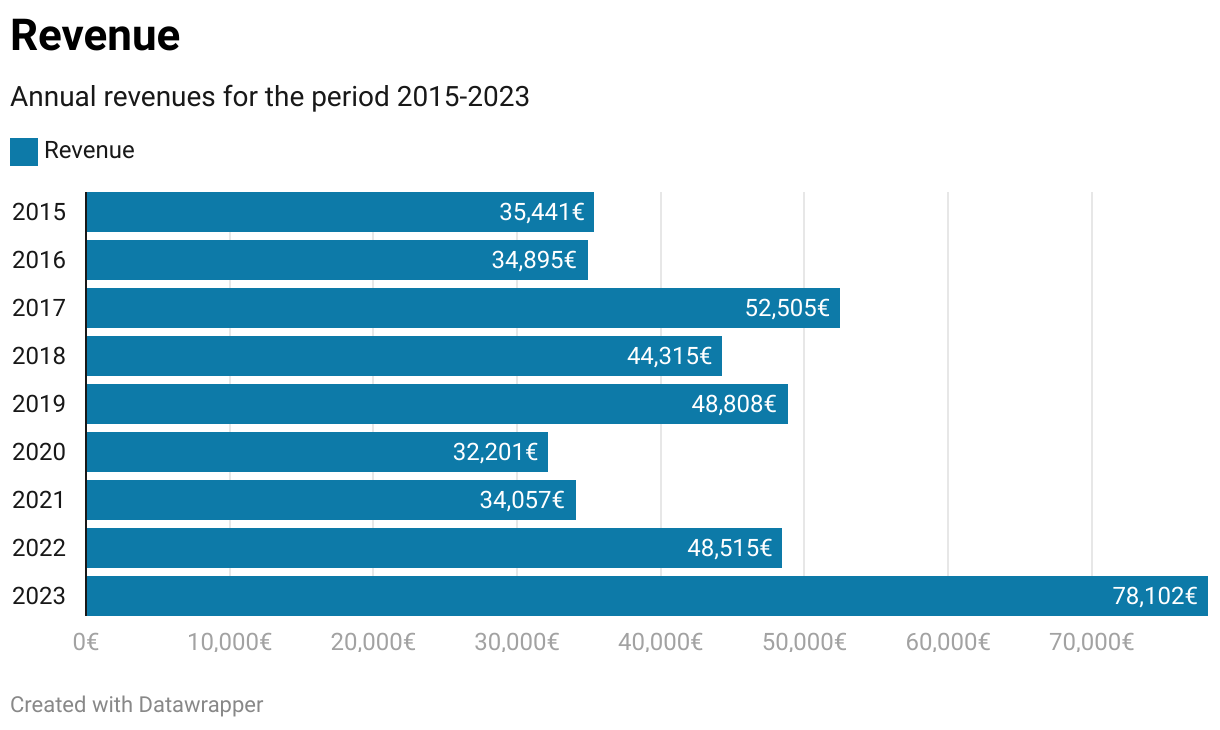
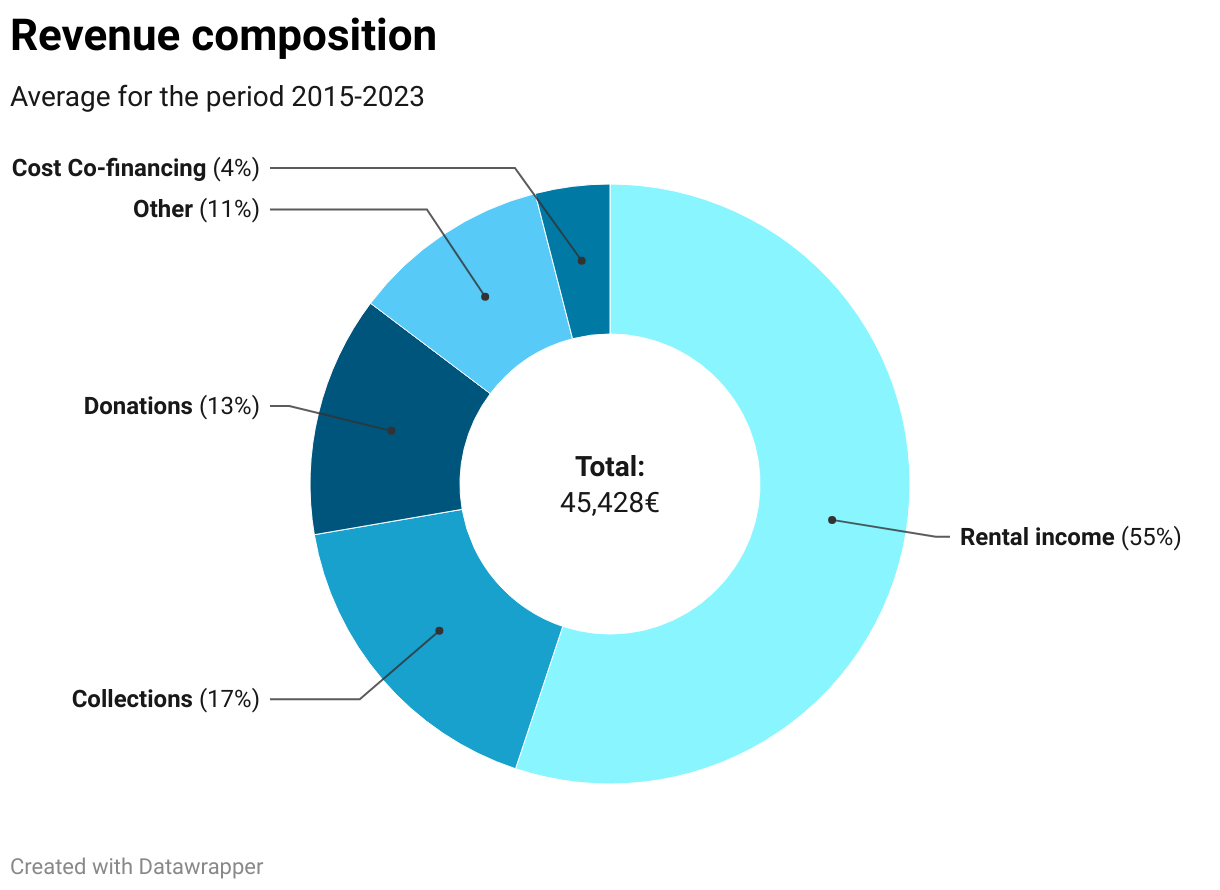
The church is managed by the Établissement de l’église du Sacré-Cœur de Jésus, the public-law entity responsible for ensuring the proper maintenance and functioning of the church. The Établissement has several sources of revenue, the most important and stable of which are:

  • Rental income
  • Mass collections and donations
  • Income from the installation of the Proximus antenna
  • Communal and regional subsidies for major renovation and investment projects

The charts below provide a historical overview of these sources of income and their relative importance. Rental income accounts for more than half of our regular revenue, excluding the exceptional subsidy received in 2024 for the repair of the church roof. Collections and donations account for approximately one third of regular revenue.

What we spend on

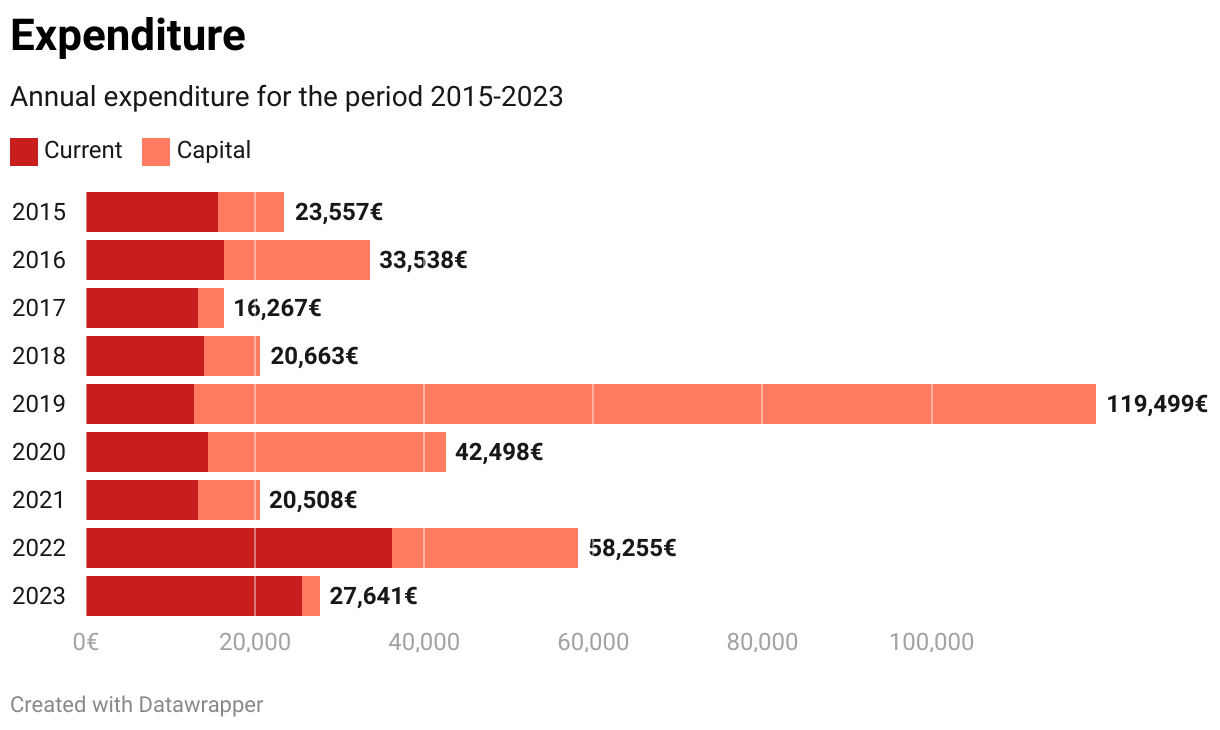
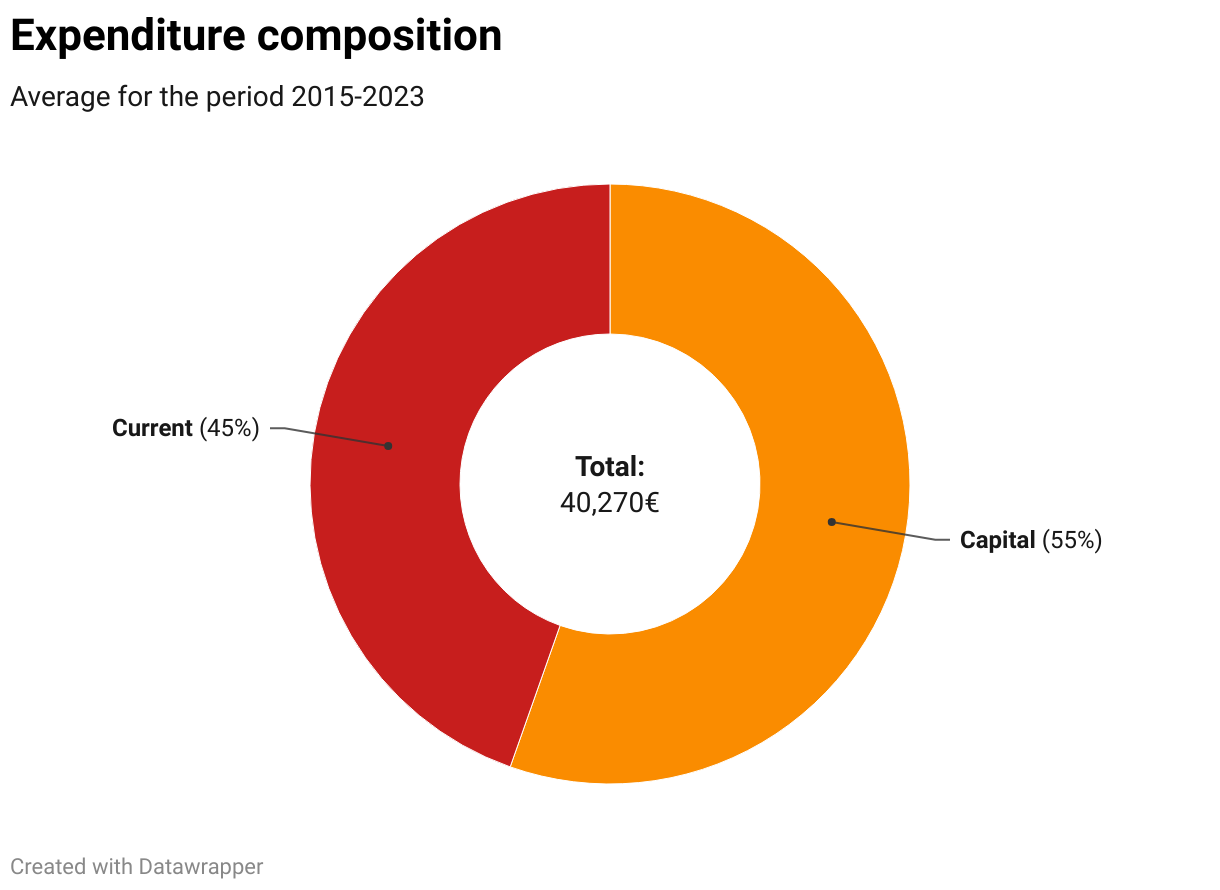
The primary responsibility of the Établissement is to maintain the church and presbytery and to cover the expenses necessary for the celebration of worship. Our expenditure falls into several main categories:

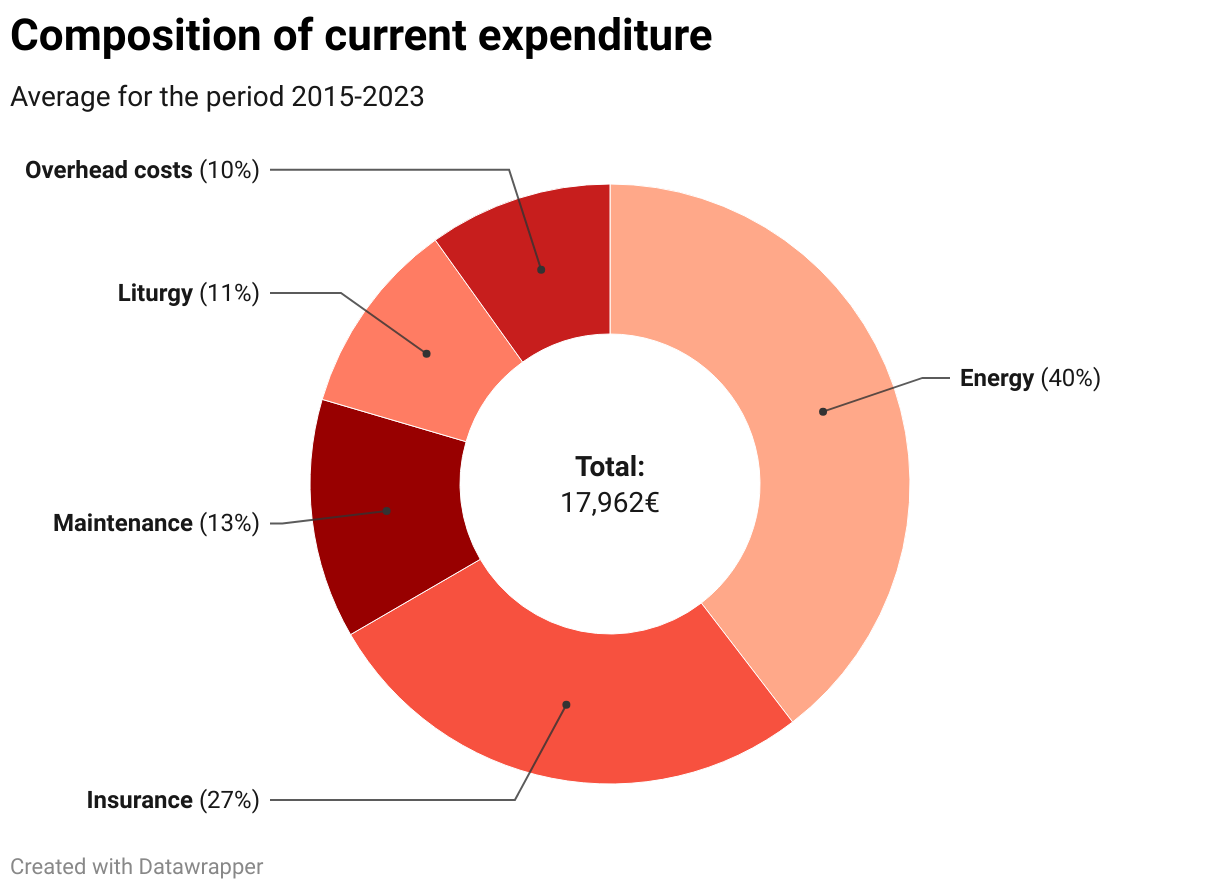
  • Energy: heating, electricity and other energy costs for the church and presbytery
  • Maintenance: servicing and repairs, including the organ, bells and fire extinguishers, as well as cleaning
  • Liturgical expenses: items needed for celebrations, such as hosts, wine, candles and liturgical books
  • Operating costs: office supplies, bank fees, web hosting, property taxes and other administrative expenses
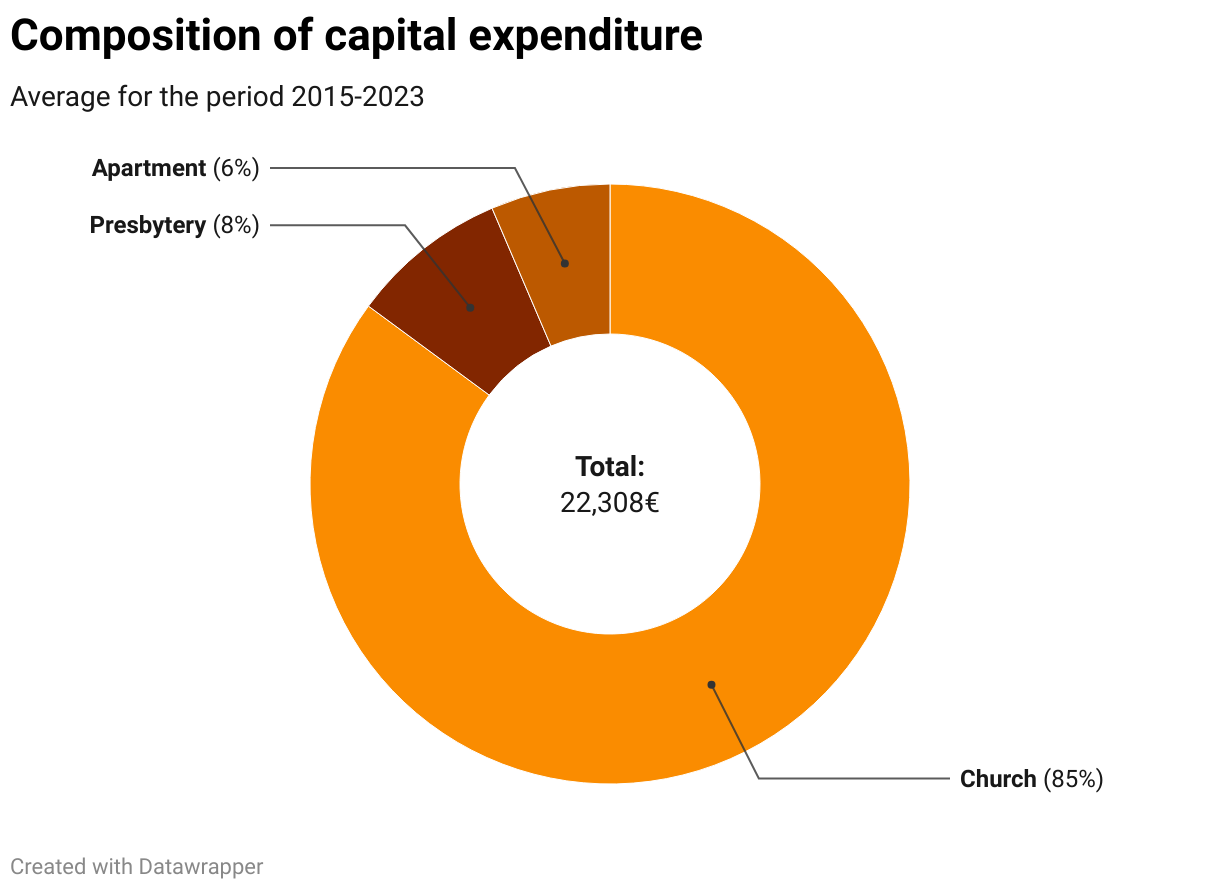
  • Repairs and investments: major repairs, renovations and investments in the church and other buildings

Average annual expenditure is affected by significant exceptional projects, notably the renovation of the hall in the church basement in 2019 and the repair of the church roof in 2024. Looking at recurring expenditure, insurance and energy costs are among the largest components, together accounting for approximately 65% of total spending.

For a more detailed overview of our finances, please see one of our most recent financial reports, available at the bottom of this page.

Financial reports

Financial outcomes in 2025

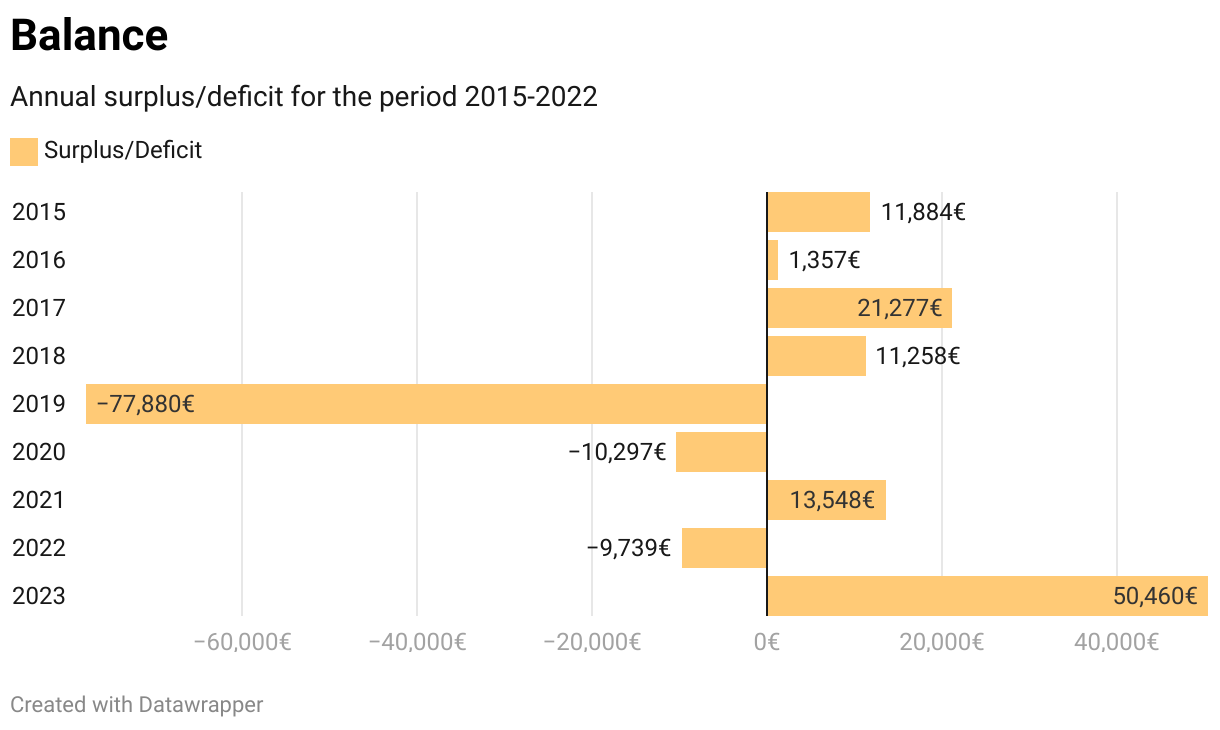
Last year featured a large project of fixing the church roof, which pushed the budget into red figures. Although the reparation works dragged due to technical issues, they were finalized in August (see box for more detailed information). An upleasant event was fire, which broke out in the church on

Read report

Financial outcomes in 2024

Last year featured a large project of fixing the church roof, which pushed the budget into red figures. Although the reparation works dragged due to technical issues, they were finalized in August (see box for more detailed information). An upleasant event was fire, which broke out in the church on

Read report

Financial outcomes in 2023

Following a deficit in 2022, the budget returned to a stunning surplus in 2023. This was largely thanks to the church roof replacement project scheduled for 2024, for which we organized special collections and limited reparations to recurring roof damages. The primary objective of 2023 was securing repair of the

Read report

Financial outcomes in 2022

After a 2021 surplus year, the budget returned to a deficit in 2022 mainly on account of a steep increase in energy prices, unexpected taxation imposed by the Belgian authorities, recurrent outlays on the reparation of the church roof, as well as further reconstruction works in the basement of the

Read report

Financial outcomes in 2021

After two deficit years, the budget returned to a surplus in 2021, thanks to a slow convergence of revenues to the pre-crisis levels and a somewhat restrained investment activity, which kept expenditures relatively low. Nevertheless, this positive development hides some trends that need deeper reflection. On the revenue side, mass

Read report
Two White Printer Papers Near Macbook on Brown Surface

Financial outcomes in 2018

In 2018, the FE reached a surplus of 11 258 €, which was lower than in 2017. On the revenue side this was mainly due to a shortfall of rental revenue and methodological changes (see below). The expenditures were on the other side higher especially due to a refurbishment of

Read report