
Just as each of you has received grace, minister in the same way to one another, as good stewards of the manifold grace of God.
- 1 Peter 4:10
What is the Établissement?
The Établissement de l’église du Sacré-Cœur de Jésus is a public-law entity responsible for the material and financial management of the church and the property associated with it.
It is made up of a team of volunteers who are responsible for managing and maintaining the movable and immovable property of the church and its associated buildings, such as the presbytery. The Établissement also ensures that the material conditions necessary for the celebration of worship are in place.
This short overview describes how the Établissement operates in our church. It is not intended to cover all the possible arrangements that apply to church establishments in Belgium.
How is Établissement Organised?
The Établissement is managed by a board of directors composed of at least five members. Members are elected or designated in accordance with the rules of the Catholic Church’s recognised representative authority. In our case, members of the current board of directors were elected by the parish.
Where a parish serves different language communities, the composition of the Établissement should, in principle, reflect this diversity by ensuring that the different communities are represented.
Our Établissement currently has six members. The members serve on a voluntary basis and elect from among themselves a president, a secretary and a treasurer.
The board is responsible for the overall management of the Établissement and for ensuring that it fulfils its responsibilities towards the parish, the Church authorities and the public authorities. Members are appointed for a five-year term, in accordance with the current Brussels legislation. The current board was elected for the period 2023-2027.
A short history
During the revolutionary period that began in 1789, several laws provided for the confiscation of Church property. Following the Concordat of 1801, signed by Pope Pius VII and Napoleon on 15 July 1801, structures were established to support the restoration of public worship and the organisation of Church property.
The Imperial Decree of 30 December 1809 formally established church councils as public entities responsible for the temporal management of worship. These structures subsequently evolved within the Belgian legal and administrative framework and are today referred to as Établissements chargés de la gestion du temporel du culte.
What does the Établissement do?
The Établissement does not deal with pastoral or liturgical matters directly. Its role is to provide and maintain the material and financial conditions that allow worship to take place.
Its responsibilities include:
- Providing what is needed for worship. The Établissement purchases and maintains the material items required for religious services, such as wine, hosts, candles, liturgical books, ciboria and patens, as well as liturgical vestments such as albs. Just as a family preparing a festive meal would make sure that the home is ready and the table properly prepared, the Établissement ensures that the church is suitably equipped for the celebration of the Eucharist.
- Maintaining the church building and its equipment. This includes heating, furniture and other installations, as well as carrying out necessary repairs to the building. As the church has been underinvested in for a number of years, maintaining it currently requires regular repairs and frequent coordination with specialised contractors.
- Maintaining the presbytery. The Établissement is also responsible for the maintenance and repair of the presbytery. Under the applicable legal and subsidy framework, the presbytery is considered part of the property associated with the exercise of worship. Keeping the building operational therefore represents an important financial and organisational responsibility.
Resources
The Établissement’s resources come primarily from:
- Collections and donations
- Rental income, including income from renting space for a mobile-phone antenna
- Income from invested funds, including donations and legacies
- Fees associated with certain ceremonies, such as burials and weddings
- Public subsidies, where the Établissement’s own resources are insufficient
For our church, our own revenues have so far generally been sufficient to cover our ordinary expenditure without requiring an ordinary municipal subsidy.
The preparation of the annual budget and accounts, as well as the management of the Établissement’s assets, are subject to detailed legal and administrative rules. The treasurer therefore has a particularly important responsibility within the council.
The budget and annual accounts are subject to oversight by both the Archdiocese and the relevant public authorities, including the Brussels-Capital Region.
Members of the Fabrique d'église

Eric Deblon
President

Robert Lindenthal
Secretary

Vladimir Solanic
Treasurer
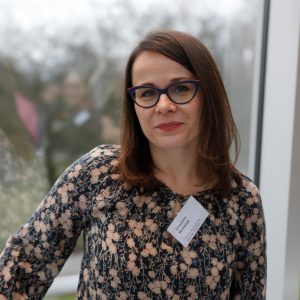
Gracjana Wozniak
Member
Agnieszka Ladomirska
Member

Sophia Joachim
Member